

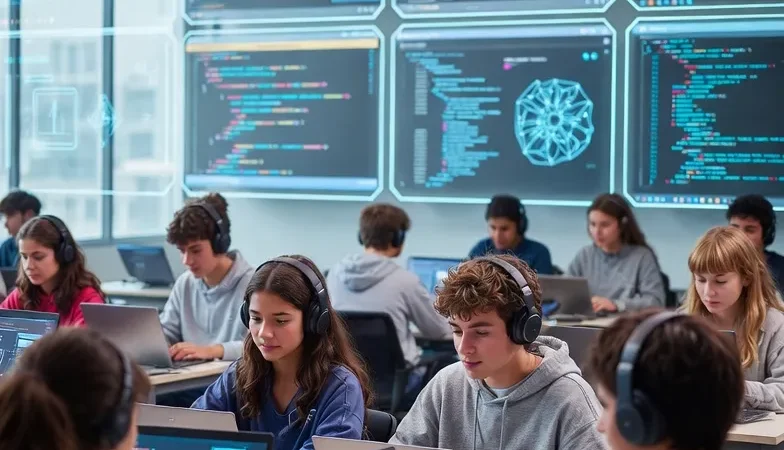
Artificial intelligence and digital technology are changing education worldwide, and Argentina is increasingly adapting to that transformation.
Schools, universities, and online learning platforms across the country are now placing greater focus on technology skills as students prepare for rapidly evolving job markets.
In 2026, digital education is becoming one of the most important discussions inside Argentina’s academic system.
Institutions in Buenos Aires and other major cities are expanding programs connected to:
- Artificial intelligence
- Coding
- Data analysis
- Digital marketing
- Robotics
- Software development
Experts believe future careers will require stronger digital skills than ever before, pushing educational institutions to modernize quickly.
Online learning also continues expanding.
Students increasingly use digital platforms for remote classes, professional certifications, and career-focused training programs. Technology now allows people to learn new skills without traditional classroom limitations.
At the same time, Argentina’s education system still faces challenges connected to funding and accessibility. Recent education budget discussions show ongoing concern about maintaining quality while adapting to modern demands.
Universities are also discussing how AI tools should be used responsibly inside academic environments.
Some educators believe artificial intelligence can improve learning efficiency, while others worry students may become overly dependent on automated systems for assignments and research.
Despite these debates, most experts agree digital literacy is now essential.
Technology companies increasingly prefer workers with strong digital communication, programming, and AI-related knowledge. Students understand this shift clearly, which is why technology-focused courses continue growing in popularity.
Argentina’s startup ecosystem is also influencing education trends.
As more tech companies emerge, students see opportunities in software development, gaming, digital business, and AI industries.
Hybrid education models combining online and physical learning are becoming increasingly common too. Many institutions believe future classrooms will mix both approaches permanently.
Younger generations are adapting quickly because technology already shapes much of their daily life.
For them, digital education no longer feels like the future.
It already feels like reality.
And as Argentina continues modernizing its education system, AI and digital skills may become just as important as traditional subjects themselves.

Leave a Reply