

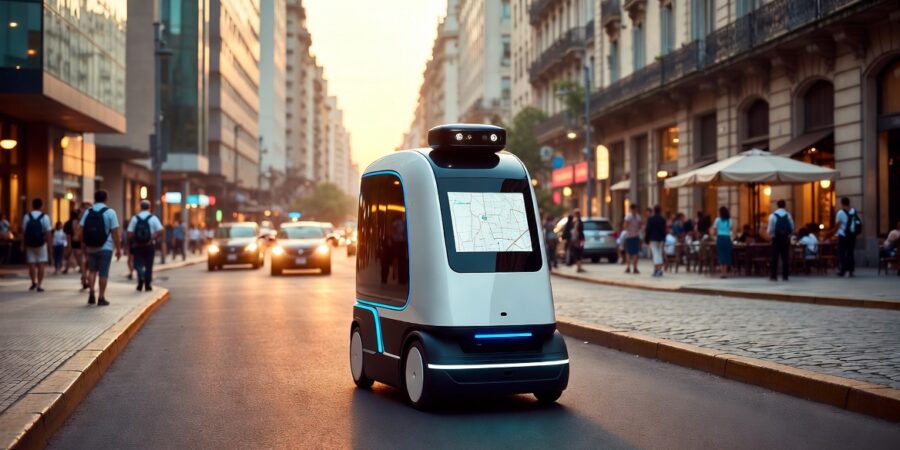
Argentina’s urban technology landscape is evolving rapidly in 2026, and one of the most fascinating trends reshaping daily life is the rise of autonomous delivery robots. Across Buenos Aires and other major cities, restaurants, cafés, supermarkets, and tech startups are experimenting with robotic delivery systems designed to make urban logistics faster, smarter, and more efficient.
These compact autonomous robots navigate sidewalks using artificial intelligence, cameras, GPS systems, and obstacle-detection sensors. They can transport food orders, groceries, parcels, and retail products directly to customers while avoiding traffic congestion and reducing delivery times.
The trend has gained momentum because online shopping and food delivery demand continue growing throughout Argentina. Consumers increasingly expect faster service and contactless delivery experiences, especially within busy urban neighborhoods where traffic delays are common.
Technology companies developing these systems are focusing heavily on AI-powered navigation. Delivery robots can recognize pedestrians, avoid collisions, and calculate optimal routes in real time. Some advanced models even communicate with traffic systems and building entrances to improve efficiency during deliveries.
Restaurants and cafés are especially interested in robotic logistics because rising fuel prices and operational costs continue affecting traditional delivery services. Autonomous systems may eventually reduce long-term transportation expenses while allowing businesses to operate more efficiently during peak hours.
Young Argentinians are embracing the technology enthusiastically because it represents a visible example of futuristic urban living. Videos of robots moving through city streets regularly attract large audiences on social media platforms, turning delivery technology into both a practical service and a source of entertainment.
The development of smart-city infrastructure is also helping accelerate adoption. Cities are increasingly exploring digital transportation systems, intelligent traffic management, and AI-powered urban planning that could eventually integrate with robotic delivery networks.
Environmental sustainability is another major advantage behind the trend. Electric delivery robots produce far fewer emissions compared to motorcycles and delivery cars, supporting broader efforts to reduce urban pollution and improve environmental efficiency.
Security and public safety remain important areas of development. Many delivery robots include surveillance cameras, remote monitoring systems, and anti-theft protection designed to prevent tampering while operating in crowded public spaces.
Universities and robotics programs throughout Argentina are beginning to focus more heavily on autonomous systems engineering and artificial intelligence research. The expansion of robotic technology is creating new educational opportunities and attracting interest from younger technology professionals.
Retail companies are also exploring robotic applications beyond food delivery. Some businesses are testing autonomous inventory transportation systems within shopping centers, warehouses, and commercial districts.
Experts believe robot-based logistics could become a major part of urban infrastructure during the next decade as artificial intelligence and automation continue improving. Future delivery systems may include drone integration, fully automated warehouses, and coordinated AI traffic management networks.
For many Argentinians, delivery robots represent more than simply faster shipping. They symbolize a broader transformation toward smarter, more connected cities where artificial intelligence becomes integrated into everyday urban life.

Leave a Reply