

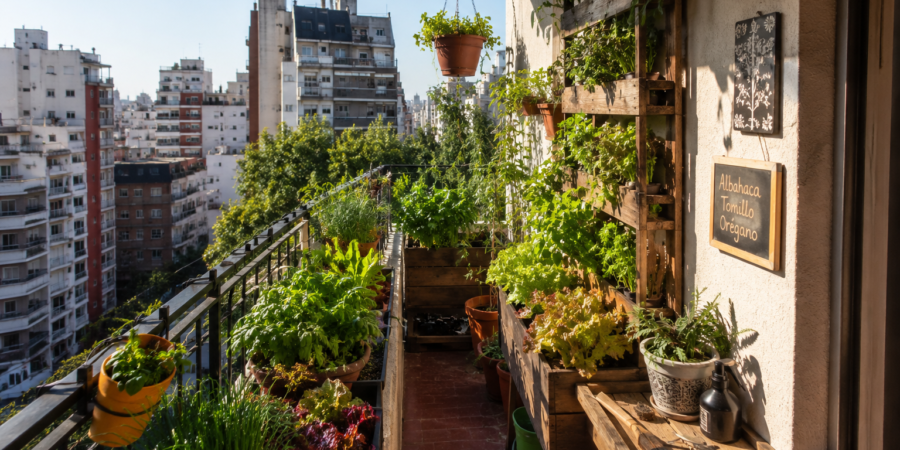
Urban gardening in Argentina is reaching new levels of creativity in 2026 as balcony farming becomes one of the fastest-growing lifestyle movements across major cities. In Buenos Aires, Rosario, and Córdoba, apartment residents are transforming tiny balconies into productive mini-farms filled with vegetables, herbs, fruits, and edible plants.
The trend reflects growing interest in sustainability, healthy eating, and self-sufficient living within dense urban environments where outdoor space is limited.
Instead of using balconies only for decoration or storage, many Argentinians now treat them as functional green spaces capable of producing fresh ingredients for daily cooking. Tomatoes, lettuce, peppers, basil, strawberries, mint, and microgreens are among the most commonly grown crops within these compact urban farms.
One of the biggest reasons behind the popularity of balcony farming is rising awareness surrounding food quality and environmental sustainability. Consumers increasingly want fresh, locally grown produce while reducing dependence on heavily processed supermarket products.
The movement has become especially popular among younger city residents who are interested in organic lifestyles but lack access to traditional gardens or rural land. Balcony farming allows apartment dwellers to reconnect with nature while remaining fully integrated into urban life.
Modern vertical gardening systems are helping maximize small spaces efficiently. Hanging planters, stacked containers, wall-mounted herb systems, and compact hydroponic setups allow residents to grow large amounts of food even on narrow apartment balconies.
Technology is strongly influencing the trend as well. Smart irrigation systems, moisture sensors, and mobile gardening apps now help beginners maintain productive balcony gardens with minimal experience.
Social media platforms have dramatically accelerated the movement. Videos showing tiny balconies transformed into lush edible gardens regularly attract millions of views online, inspiring more people to experiment with urban farming techniques.
The psychological benefits of balcony gardening are also becoming widely recognized. Many city residents find gardening relaxing and emotionally restorative, especially in fast-paced urban environments where access to green space is often limited.
Restaurants and cafés are beginning to embrace small-scale urban farming concepts too. Some businesses now grow herbs and edible flowers directly on terraces and balconies to supply fresh ingredients for customers.
Environmental experts note that widespread urban gardening can help improve air quality, reduce urban heat, and support biodiversity by creating small ecosystems within dense cities.
Educational workshops teaching apartment farming and composting are becoming increasingly common throughout Argentina. Gardening communities regularly share tips about maximizing sunlight, growing seasonal crops, and designing efficient small-space gardens.
Experts predict balcony farming could continue growing rapidly as sustainability, rising food costs, and urban wellness trends reshape how people think about city living.
For many Argentinians, balcony farming represents more than simply growing vegetables. It symbolizes independence, creativity, and finding ways to reconnect with nature even within highly urbanized modern lifestyles.

Leave a Reply