

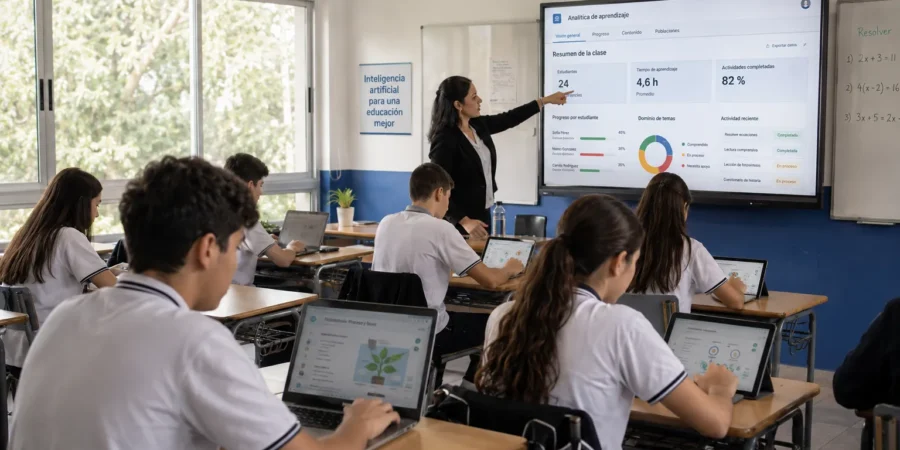
Artificial intelligence is rapidly becoming one of the most influential forces in Argentina’s education sector. During 2026, educational institutions across the country are expanding AI-related programs, teacher training initiatives, and digital learning resources as they prepare students for an increasingly technology-driven future.
Recent developments indicate that AI is no longer viewed simply as an emerging technology. Instead, it is becoming an essential skill area that students, educators, and institutions must understand to remain competitive in the evolving global economy. Multiple educational initiatives launched this year focus specifically on AI literacy, digital citizenship, and practical classroom applications of artificial intelligence.
One of the most significant trends is the growing adoption of AI-powered learning tools by students. Research published in Argentina indicates that AI technologies are already being used by a large percentage of students for educational purposes, including homework assistance, research, writing support, and personalized learning activities. This rapid adoption is forcing educators to rethink traditional teaching methods and assessment strategies.
To address these changes, educational organizations are investing heavily in teacher training. New professional development programs are helping educators understand how AI works, how it can be used responsibly, and how it can enhance learning outcomes without replacing critical thinking and human instruction. Recent national training initiatives have specifically focused on AI fundamentals, generative AI applications, digital literacy, and classroom integration strategies.
Universities are also expanding programs related to artificial intelligence, machine learning, data science, and advanced computing. These fields are increasingly attractive to students because of strong career opportunities both within Argentina and internationally.
Beyond technical skills, educational leaders are emphasizing ethical AI use. Topics such as academic integrity, information verification, privacy protection, and responsible technology usage are becoming important parts of modern curricula. Students must learn not only how to use AI tools but also how to evaluate their outputs critically and responsibly.
The growing role of AI in public policy discussions is also increasing public awareness. National conversations surrounding artificial intelligence are helping students recognize that AI will influence fields far beyond technology, including healthcare, finance, government, agriculture, manufacturing, and media.
Educational technology companies are responding by developing new learning platforms designed specifically for Spanish-speaking students and teachers. These tools often provide personalized learning experiences that adapt to individual student progress and learning styles.
Experts believe that AI literacy may soon become as fundamental as computer literacy was during previous decades. Students who develop strong digital and AI-related skills today will likely enjoy significant advantages in future labor markets.
For Argentina, the expansion of AI education represents an important investment in human capital. By preparing students for the realities of a technology-driven economy, educational institutions are helping build a workforce capable of driving innovation, entrepreneurship, and economic growth throughout the coming years.

Leave a Reply