

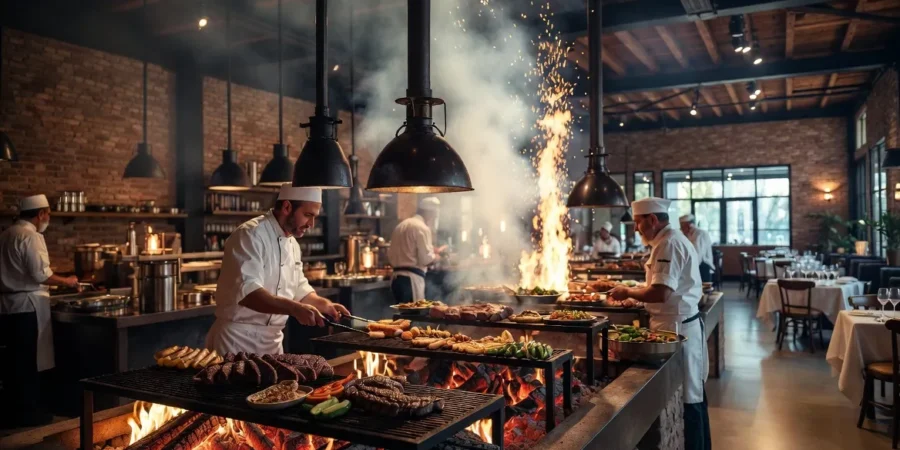
Argentina’s legendary grilling tradition is evolving dramatically in 2026 as a new generation of chefs transforms open-fire cooking into one of the country’s most innovative culinary movements. Across Buenos Aires, Mendoza, and Patagonia, modern fire-cooking restaurants are reinventing traditional Argentine cuisine by combining ancient cooking techniques with gourmet presentation and experimental flavors.
Open-fire cooking has always been deeply connected to Argentine culture through asado traditions and social gatherings centered around grilled meats. However, modern chefs are now expanding these methods far beyond conventional barbecue by using live flames, wood smoke, charcoal, and ember cooking to create sophisticated dining experiences.
Today’s fire-focused restaurants experiment with vegetables, seafood, desserts, artisan breads, and smoked ingredients alongside traditional meats. The goal is not simply cooking over fire but creating deep flavors, textures, and visual drama that elevate dining into an immersive culinary experience.
One reason behind the popularity of fire cooking is authenticity. Consumers increasingly seek food experiences that feel handcrafted, emotional, and connected to natural cooking traditions rather than industrial food preparation methods.
The visual aspect of live-fire kitchens has become especially attractive. Restaurants often feature open cooking areas where customers can watch chefs work directly with flames, smoke, and glowing wood embers. This theatrical atmosphere creates memorable dining experiences that feel highly sensory and emotionally engaging.
Social media has helped accelerate the trend massively. Videos showing dramatic sparks, sizzling meats, and slow-motion flame cooking regularly go viral online, attracting food enthusiasts and tourists searching for unique culinary experiences.
Sustainability is also influencing modern fire-cooking culture. Many restaurants use locally sourced wood, regional ingredients, and nose-to-tail cooking methods designed to reduce food waste and support local producers.
Wine culture plays an important role as well. Fire-cooked dishes pair naturally with Argentina’s world-famous wines, especially Malbec varieties from Mendoza, creating complete dining experiences strongly tied to national culinary identity.
Younger chefs are pushing creative boundaries by combining traditional Argentine grilling techniques with international culinary influences from Japan, Scandinavia, and Mediterranean cuisine.
The movement is especially strong among tourists looking for authentic food experiences beyond conventional steakhouse dining. Fire-cooking restaurants provide a more artistic and modern interpretation of Argentine culinary heritage.
Industry experts believe live-fire cuisine may become one of the defining global images of modern Argentine gastronomy because it combines tradition, craftsmanship, performance, and luxury dining into one highly distinctive style.
For many Argentinians, the fire-cooking movement represents far more than restaurant innovation. It reflects a cultural celebration of tradition reimagined through creativity, craftsmanship, and modern culinary storytelling.

Leave a Reply